



Photo BrianLasenby via Getty/Canva.
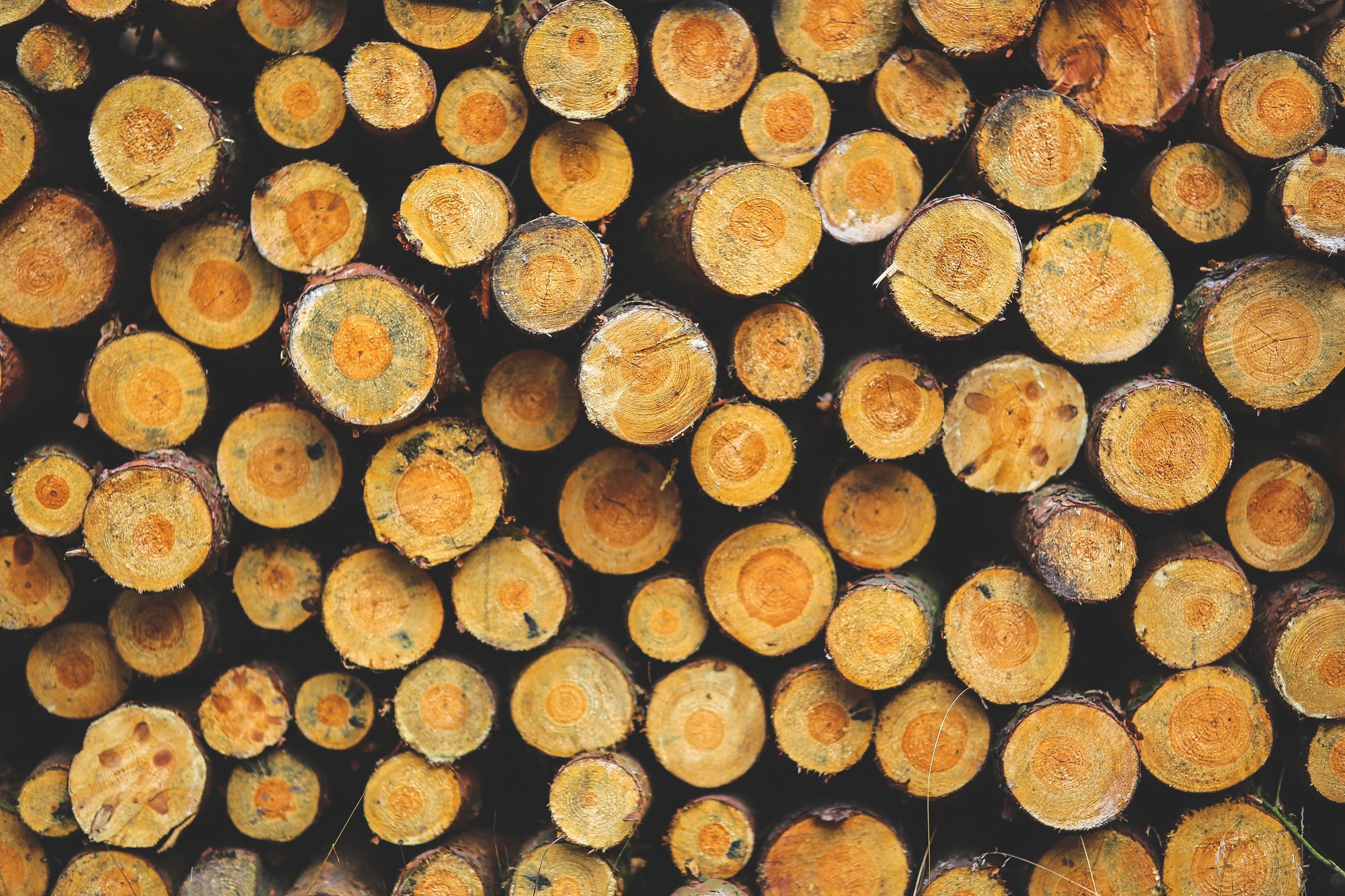
Hurricane Helene damaged some 822,000 acres of timberland in Western North Carolina. In these open spaces, surprising bird species are finding room to roost — and maybe new threats.
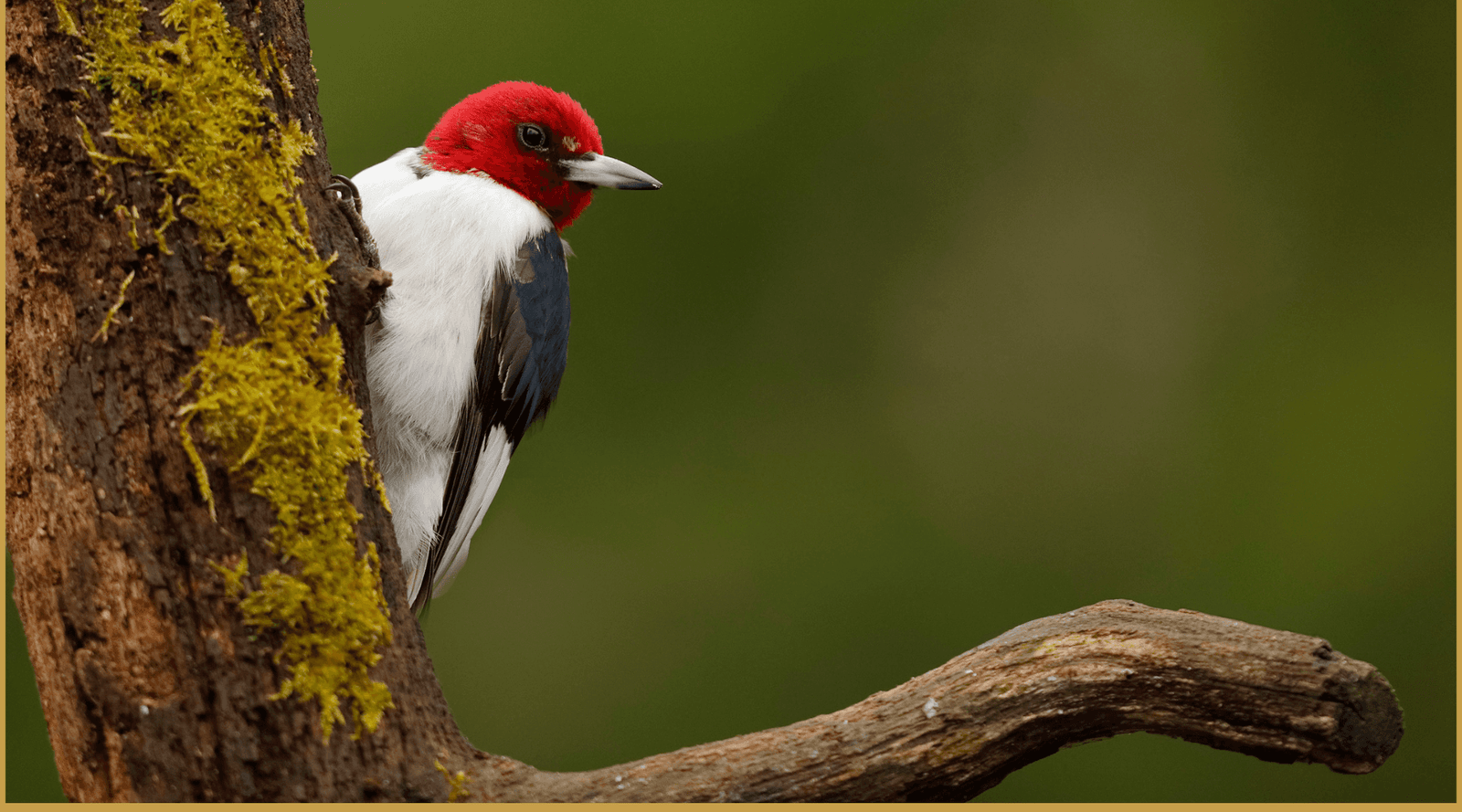
This spring, John Koon traveled up Elk Mountain Scenic Highway, a winding road north of Asheville, North Carolina, after word spread among local birders about a rare arrival. Three pairs of red-headed woodpeckers had been spotted among standing snags, and one pair had built what was believed to be the area’s first nest in roughly a decade.
With some patience and a bit of luck, John caught a glimpse.
“It’s the stereotypical woodpecker, with a completely red head and stunning black-and-white plumage on the rest of its body,” said John, president of the Blue Ridge Audubon. “It’s really a handsome bird.”
While fairly common in the open lowlands of the eastern United States, the woodpecker had become a rare sight in the densely wooded mountains around Asheville. That is, until Hurricane Helene tore through Western North Carolina in September 2024, leaving once-dense forests broken and exposed to the sky. All told, an estimated 822,000 acres of timberland were damaged in the state.
For red-headed woodpeckers, however, that destruction created opportunity. The species prefers open woodlands with dead and decaying trees, which provide insects to eat and cavities for nesting.
“Even the trees that had been blown down — trees we think of as worthless because they’re on the ground — are still beneficial to woodpeckers,” John said.
APPALACHIAN CRITTERS











Every purchase helps keep our Appalachian magazine alive, thriving, and free to readers like you.
Elsewhere in Western North Carolina, researchers are beginning to trace how birdlife has shifted since the storm. Clemson University graduate student Adrianna Nelson spent the summer surveying birds in forests largely spared by Helene, forests damaged by it, and damaged areas later managed through practices such as salvage logging. Her work is part of a larger U.S. Forest Service-funded project.
Although Nelson is still processing her data, one pattern immediately stood out: Her team captured more birds and a wider variety of species in forests altered by Helene.
The answer is literally in the weeds. A closed canopy leaves little room for the thick, low-growing cover many birds need. When trees fall, sunlight reaches the ground, and shrubs, grasses, and young saplings spring up in the openings, bringing insects, seeds, and plenty of hiding places with them.
That tangled understory can be especially useful for fledglings still learning to find food and avoid predators. It may also create much-needed habitat for two specific species. The number of ruffed grouse have been dropping in the area for decades. These birds thrive in dense, young forests, which will soon be forming in areas damaged by Helene. The second species is also considered threatened: the golden-winged warbler. It relies on shrubby openings and forest edges, which now abound in Western N.C.
Still, a busier forest is not necessarily a healthier one. Habitat may attract plenty of birds while providing too little food, too many predators, or too few safe places to raise young. Ecologists call this an ecological sink: Birds move in, but not enough of their young survive to sustain the population.
ALSO FROM NORTH CAROLINA









Every purchase helps keep our Appalachian magazine alive, thriving, and free to readers like you.
To see beyond immediate beak count, Adrianna’s team used a monitoring protocol known as MAPS, short for Monitoring Avian Productivity and Survivorship. Researchers stretch fine mist nets through the forest and wait for birds to fly into them. Think of it as a nearly invisible tollbooth for feathered friends.
Each bird is carefully removed, identified, measured, and banded before being released. Researchers record its age and sex, along with details such as muscle development and fat stores. Those measurements can reveal whether young birds in disturbed forests are in better or worse condition than those growing up beneath an intact canopy.
Clear answers about reproduction and survival may require at least five years of data. The findings could eventually help the Forest Service decide how to manage damaged areas for species at risk. Decisions about where to leave fallen trees and where to remove them could shape which birds benefit from a disturbed forest’s next chapter.
“In a way, Hurricane Helene was one giant experiment,” Adrianna said. “Now, we can learn how bird species are responding on a really big scale.”
While we wait for the results of that experiment, the red-headed woodpecker offers an early reminder: A damaged forest is not an empty one.
TINY SPECIES IN APPALACHIA
NEXT UP