


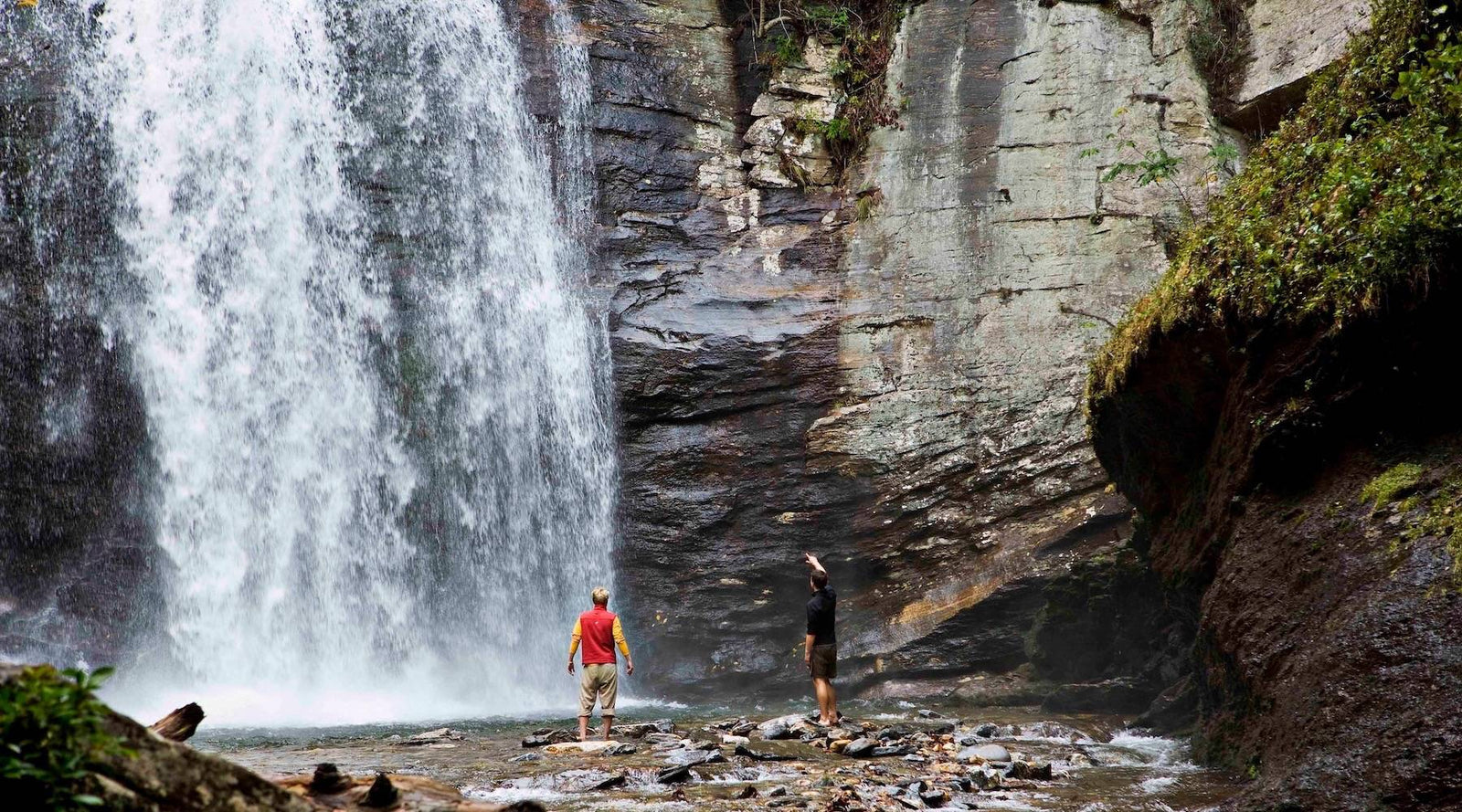

LOOKING GLASS FALLS IN N.C.'S PISGAH NATIONAL FOREST. PHOTO COURTESY OF BLACKHORSE STUDIOS.
These cascades range from easy roadside stops that draw busloads of tourists to hidden backcountry gems.
I'm by no means rich. My daily driver rolled off the assembly line in 2007, back when people still downloaded digital music rather than streaming it, and if grocery costs keep climbing, I might have to forage for food like my ancestors did.
But, for whatever I lack in money, I am filthy stinkin’ rich in waterfalls.
I live minutes from Transylvania County, North Carolina (aka the Land of Waterfalls), where 250-some cascades range from easy roadside stops that draw busloads of tourists to hidden backcountry gems.
Living this close to more than 250 waterfalls has made me a little hard to impress, but these five, scattered from Vermont to Georgia, still have enough thunder, drama, and drop-dead scenery to earn top spots on my list.

PHOTO COURTESY OF PHOTOGRAPHER Thomson20192 ON Wikimedia.
AMICALOA FALLS
Dawsonville, Georgia
Amicalola Falls isn't the least bit bashful. At 729 feet tall, this North Georgia giant has collected more superlatives than a high school valedictorian, from tallest waterfall in Georgia to one of the tallest cascading waterfalls east of the Mississippi. Here, water spills down a series of rocky ledges before vanishing into the forest below. Several overlooks offer excellent views, but the best vantage points require climbing more than 600 stairs. Think of it as a small price to pay for standing in the presence of greatness.

PHOTO COURTESY OF photographer Tommy Penick AND Visit N.C.
PARADISE FALLS
Tuckaseegee, North Carolina
Paradise Falls doesn't exactly hand itself over. Hidden in Nantahala National Forest near Tuckasegee, this 100-foot waterfall requires a half-mile trek complete with stream crossings, muddy scrambles, and a few rope-assisted descents. The reward? A dramatic cascade plunging into a deep emerald swimming hole. On a hot July afternoon, it feels less like North Carolina and more like something you'd stumble across in a fairy-laden fantasy novel.
GIFTS FOR NATURE LOVERS











Every purchase helps keep our Appalachian magazine alive and thriving.

PHOTO COURTESY OF W.V. Department of Tourism.
BLACKWATER FALLS
Davis, West Virginia
Most waterfalls are remembered for their size. Blackwater Falls is remembered for its color. Fed by tannin-rich water stained by fallen hemlock and red spruce needles, the Blackwater River tumbles 57 feet into a rugged gorge near Davis, West Virginia. The result is a sweet-tea-colored cascade that looks almost unreal against the surrounding forest. It's one of the most photographed waterfalls in the Mountain State and well worth the 200-plus stairs it takes to reach its overlook.

PHOTO COURTESY OF VT. Tourism.
MOSS GLEN FALLS
Stowe, Vermont
Moss Glen Falls feels strangely familiar. Located just outside Stowe, this 125-foot waterfall plunges through a steep, moss-draped gorge surrounded by dense Green Mountain forest. Despite being nearly a thousand miles from my corner of North Carolina, it feels like kin to the waterfalls back home. The moss-covered rocks, the cool spray, the hush of the surrounding woods — it all serves as a reminder that Appalachia doesn't stop at the Mason-Dixon Line.
TRAVEL SNACKS








Every purchase helps keep our Appalachian magazine alive and thriving.

PHOTO COURTESY OF PHOTOGRAPHER Baxter Mills AND Visit N.C.
LOOKING GLASS FALLS
Pisgah Forest, North Carolina
In a region famous for waterfalls, Looking Glass Falls might be the closest thing N.C. has to a hometown celebrity. Located just off U.S. 276 in Pisgah National Forest, this 60-foot cascade delivers one of the biggest payoffs in the Blue Ridge for one of the smallest investments. A short staircase leads from the parking area to the base, where Looking Glass Creek fans across a broad rock face before crashing into a chilly pool below. I might be biased because it’s close to home, but if you've only got time for one waterfall in Appalachia, this is a strong contender.
One word of caution: Rocks are slick; currents are stronger than they appear; and mountain weather changes its mind faster than a squirrel crossing the road. Proper footwear and planning can save lives when visiting waterfalls.
HOT WEATHER HAVENS
NEXT UP