


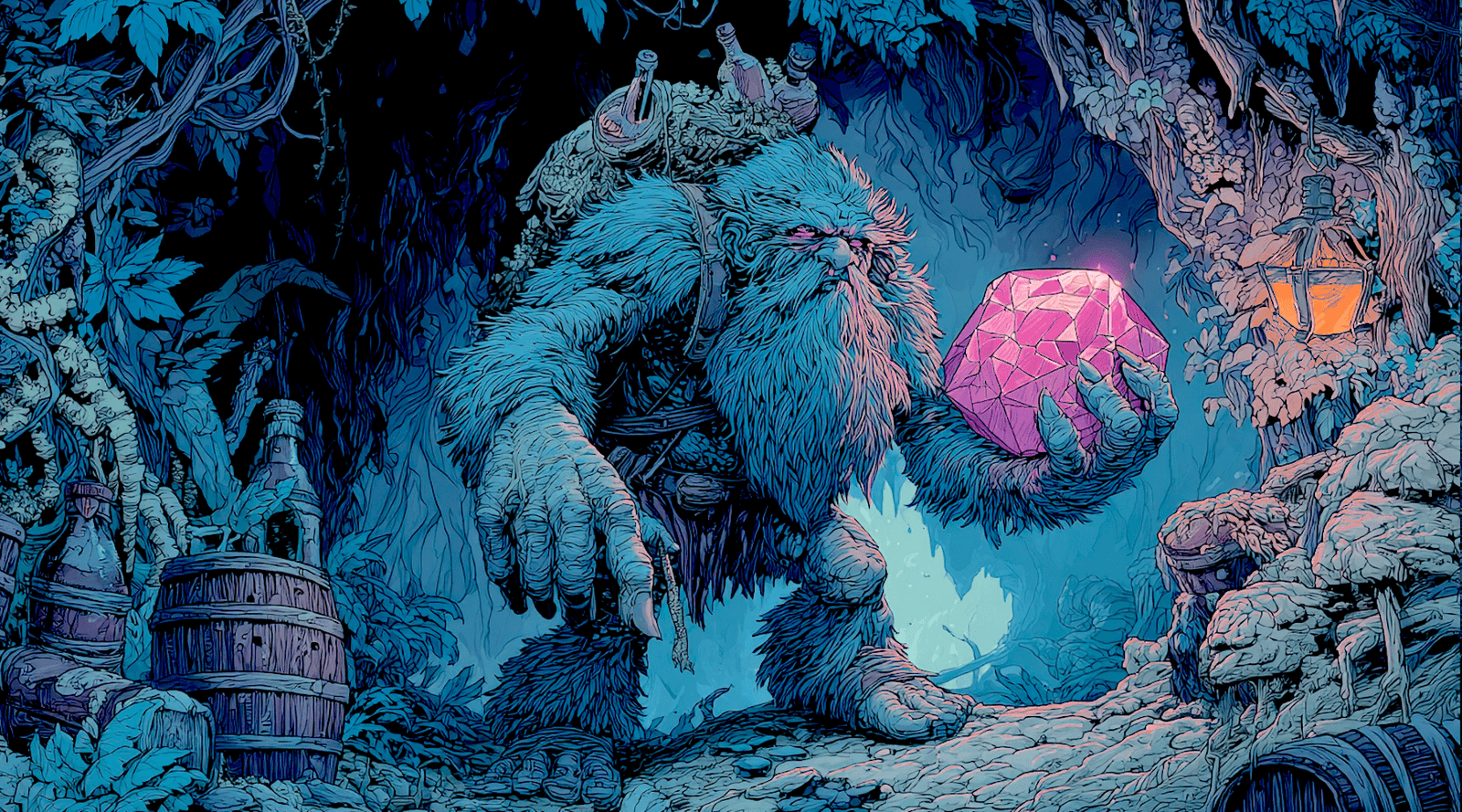

IMAGE OF BOOJUM BY MIDJOURNEY.
What began as a marketing ploy grew into an enduring myth about a gentle golliath and his lovestruck bride.
Wander the high ridgelines of Western North Carolina’s Balsam Mountains long enough, and you start to notice things. A rustle in the rhododendrons. The sharp scent of something beastly. The sinking feeling that you’re not alone.
If you ask old-time musician Richard Hurley, he’ll tell you it’s Boojum.
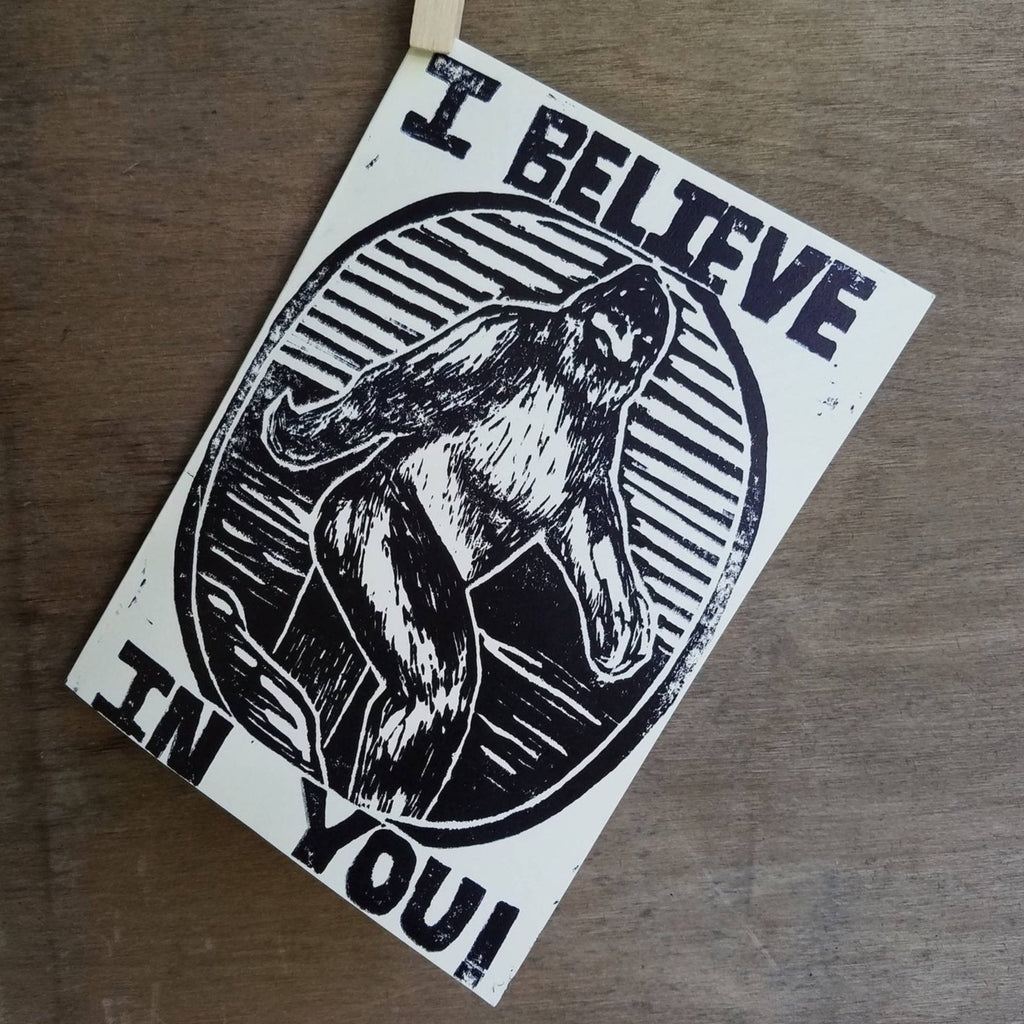
Half man, half beast, Boojum is said to stand eight feet tall, covered in shaggy gray hair, with a face that looks almost human if you catch it just right. He roams the ridges above Haywood County, collecting gemstones and stashing them away in caves and old liquor jugs. “He’s our version of Bigfoot,” Richard said.
But for those keeping score, Boojum actually predates Bigfoot. While the modern legend of Bigfoot gained traction with the 1958 discovery of a 16-inch footprint in California, Boojum’s tale traces back to the early 1900s, when developer S.C. Satterthwait built the Eagle’s Nest Hotel high above Waynesville, N.C.
The resort catered to well-heeled travelers from farther south, offering sweeping views and cool summer temperatures. But visitors wanted more than scenery as they sipped bourbon on the porch. They wanted a story. So, inn staff filled in the rest, spinning a yarn with just enough intrigue to keep guests leaning in a little closer.
CRYPTIDS AND CREEPY


Every purchase helps keep our Appalachian magazine alive, thriving, and free to readers like you.
A local folklore researcher who, much like the cryptid itself, prefers to avoid the limelight, described the tale as a “brilliant piece of storytelling” with a “mysterious but safe creature at its center.”
“It hits all the beats of what a tourist would be expecting while enjoying their luxury accommodations,” the source said. “And it’s a good enough story that it outlives its original purpose and enters into folklore.”
A key part of the tale is Boojum’s bride, Annie — a young woman who, unlike others, does not run when she happens upon the giant. Instead, she meets his gaze and sees a kind of gentleness. Fast in love, she follows him into the mountains, where she later becomes known as Hootin’ Annie, a name tied to the strange, echoing holler she uses to find her beau when he disappears into the hinterlands searching for gemstones.
Richard honored this quirky cryptid and his lady love in his 2016 ballad, “The Legend of the Boojum.” Atop a front-porch rhythm, Richard croons:
“His love for her was deep and true
But gems held their allure.
He’d leave poor Annie lonesome
And search for rubies pure.”
Richard Hurley performs "the legend of the boojum."
The singer-songwriter said the story follows a familiar arc, something like “Beauty and the Beast,” where wildness is tempered by love. But much like the fairytale, it’s not without complications.
Earlier versions of the story cast Boojum as a kind of peeping Tom, lurking in the woods and watching women bathe in mountain streams — a detail that “just doesn’t fly today,” Richard said. Like many stories built for visitors, the legend also leans into a simplified version of Appalachian life, one shaped as much by outsider expectations as lived experience.
And still, the story of Boojum endures. Maybe because it’s less about the creature itself and more about the mystery of the landscape this legend inhabits — long shadows cast across ridgelines and the lonely sounds that echo in the night.
Boojum, in all his strange, rough-hewn glory, speaks to Appalachia’s untamed nature.
“You can search forever across our mountain land.
You’ll see him if he lets you roaming in the wild.
He’ll be out there forever. He’s Mother Nature’s child.”
ALSO FROM NORTH CAROLINA










Every purchase helps keep our Appalachian magazine alive, thriving, and free to readers like you.
MOTHMAN IS REAL (IMPORTANT)
NEXT UP