




Appalachian accents are like no other. A mash up of influences—British Isles, German, African dialects, probably some Native American—all mixed together and baked in our secluded hills for a couple centuries.
Some say that the resulting sound is more like Elizabethan English than the contemporary accent in England. I'm not sure how to confirm that without a time machine, but I do know that the minute Appalachian natives leave the mountains, that accent sets them apart.
You know how it goes. A friend from, say, New Jersey is deaf to his own thick intonation but doesn't hesitate to reference the Beverly Hillbillies or Deliverance when poking fun at yours. Some folks call it vocal imperialism. I just call it mean.
But it works. Countless mountain people are ashamed of the sound of their own voices, some going so far as beating the accent into submission with diction classes.
This pitiful pattern set today's guest blogger Chelyen Davis to thinking. A Southwest Virginia native who lives in Richmond, she sees "code switching" among Appalachian folks all the time. That's when someone switches dialects depending on the circumstances.
Chelyen, who also writes on her own blog Homesick Appalachian, asks an important question—now that we're constantly exposed to people from other regions, is code switching just a fact of life or are we losing a key piece of our mountain heritage?
*
NPR recently started an interesting conversation on Twitter by asking if public radio voices are “too white” and if those white-sounding public radio voices are limiting the audience, shutting out people who don’t necessarily choose to listen to people who don’t sound like them.
The discussion grew out of an African-American professor and hiphop artist who did some radio work and noticed that he talked differently for radio, and was considering why. From what I could tell from the Twitter discussion, folks of other ethnicities weighed in, and then people started talking about how public radio voice isn’t just white, it’s a sort of standard, non-accented white. You don’t often hear regional accents on NPR, no matter what race the speaker is.
That’s an interesting and valuable conversation to have, and it gets into all kinds of issues — race, ethnicity, regional dialects, the value placed on how we talk, how we sound, the words we choose, how others judge us by all that, etc. An interesting comment on that is here.
But it got me thinking off on a specific related tangent — Appalachian code-switching. This probably would apply to any strong regional accent (hi, Boston), but Appalachian accents are my own experience.
I don’t think everyone in Appalachia (or the south, or another region with a strong accent) code-switches. Not everyone needs to. My uncles and cousins mostly still live in the small communities where they grew up, and I doubt they talk any differently at work on the strip job than they do at home. They might change their words a bit when they go to, say, the doctor’s office in Bristol or Johnson City. But largely, their lives are lived around people who talk the way they do.
But I grew up hearing my parents code-switch, because they left those communities. They were both the first in their (large) families to go to college, and we lived in a town — still in Appalachia, but outside the more isolated, small communities where they both grew up. You could hear my mother’s voice change when she called her parents on the phone. To neighbors where we lived, it was your basic “Hi, how are you?” To her own parents, it was
“Howdydo. Howre you’uns a-doin?”
She still does that when she calls her dad or brothers, or when we visit them. And so do I. It seems you only need to code-switch when you leave. (Or become a radio/tv host.)
I am an adopter of accents. I think there’s actually a word for that but I don’t know it — I unconsciously mimic the accent of the person I’m talking to, if I talk to them for long enough and if their accent is distinctive enough. I don’t mean to, and they aren’t necessarily flattered by it, and I don’t always do it strongly. I first noticed it when I spent a month in England in college.
But my own accent is softly Southwest Virginian. I’ve lived away a good long while, so it’s not as strong as, say, some of my cousins’ accents. And probably it never was, because we lived in town and my parents went to college and I grew up watching public TV and, as I noted in a previous post, I was the kind of kid who thought “ain’t” wasn’t a proper word. But it’s there. People here, away from the mountains, sometimes comment on it, or ask where I’m from. It’s a great way to find fellow mountain folks here — we can hear each other talk, and believe me, if I hear an accent that sounds like it’s from Southwest Virginia, I’m going to ask that person where they’re from.
My sister’s accent has mostly faded, but mine hasn’t. I think I’m just prone to an accent. Also, I lived back home for a couple of years after college, so maybe it sort of “set” then. It gets stronger if I’ve had a glass or two of wine, and it gets stronger when someone asks about it. It knows when it’s being talked about, and it likes to show off.
I have a professional job, but I rarely consciously talk differently than I would, say, at a party or at home. The primary exception has been at public events — say, if I’m on a speaking panel — or the occasional times when I’ve been a guest on a radio show (public radio, at that!). I think the accent tightens up a bit then, tries to behave itself. I probably make some different word choices than my colloquial speaking voice, although I know I’ve said “might could” on the radio.
My writing changes some, too. I’m rereading this post and it sounds awfully formal. If you and I were sitting down and just chatting about this, I would probably say things a bit differently.
But that’s all code-switching, I suppose, to an extent. I also know I talk differently when I call home to Mom, and even more so when I call my grandfather. I talk differently when I visit my parents’ families. My boyfriend tells me I talk differently when I come back from a visit home. So I code-switch both ways, to a lesser accent and to a stronger one.
And I’m glad. I’d rather switch than talk blandly all the time. I don’t want to lose my accent, my word choices, the colorfulness of Appalachian ways of talking. I’d be fine with that accent getting stronger. I know many people outside the mountains assume someone with a strong mountain accent is a dumb hick, but I figure that’s their problem, not mine. I love using terms like “might could/should/would” — and it is so handy, perfectly describing that point between “I could go to the party” and “I only MIGHT could go to the party.” I love having that vocal connection to home, to a place and a culture and a history.
My boss once told me he had heard a theory that we talk like where we want to be. I miss home, so I love talking like people back home. People who are glad to get out of the mountains (and there are some such misguided souls) probably welcome the disappearance of their accents, consciously work to shed them. The boss had come from a poor, flat farming area in North Carolina. He didn’t seem to much miss it, and he didn’t talk like his roots either.
I’m not a linguist. I assume there are studies and papers and research and opinions out there about this subject, about Appalachians shedding their accents in the flatlands. I know there are many papers and studies and ruminations about the broader issues of the homogenization of language, the pernicious effects of TV (and radio!) on making us all sound the same, the value judgments placed on word choices and on speaking “proper” English, and all that.
But I love accents and words that change by region. Perhaps because I value them so highly for my own sense of culture and place, I’m all for everyone else having their own too. Why should we all talk the same? Language should be colorful. So while I love public radio, I hope it doesn’t Henry Higgins us all, stamping out accents and strange pronunciations and weird words.

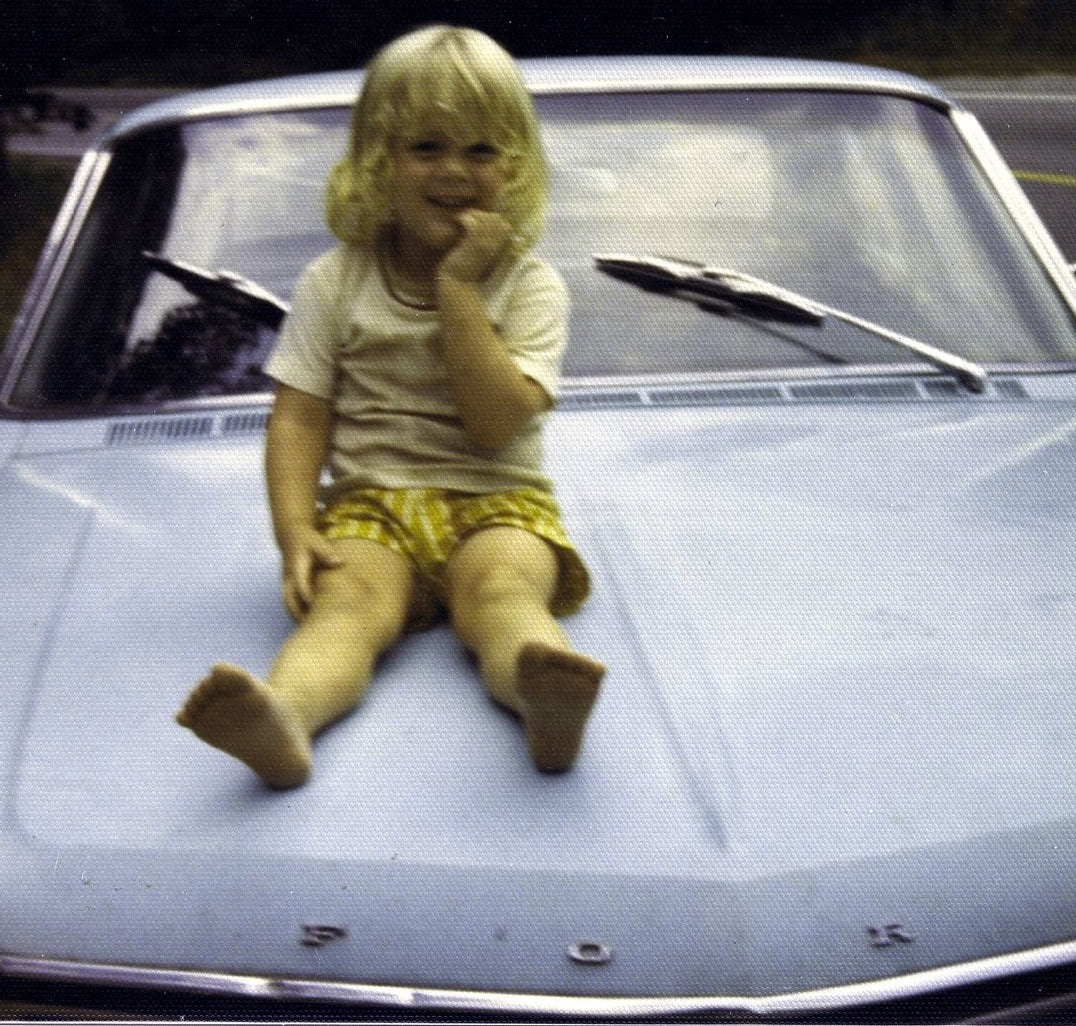
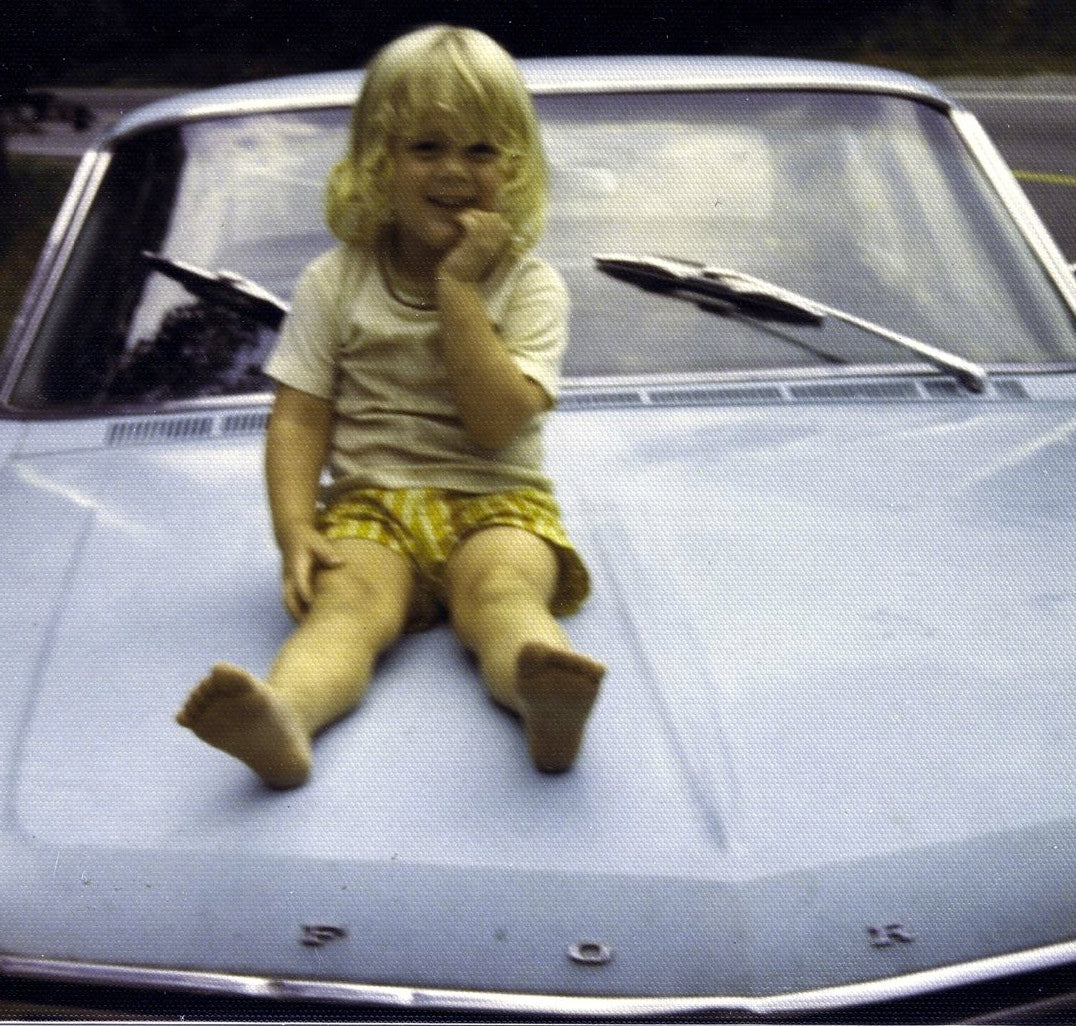
 Me, when I had a strong accent.[/caption]
Once I had a mountain twang. It was thick as bacon fat and stronger than the scent off a rose bush in full bloom. When I was three and living on Bent Mountain, my daddy recorded me. On that tape, you can hear me sassing at bedtime, "Maw'ma, ayan't slea'pee. Ayan't red'ee for bed, Maw'ma."
Plus first dibs on sales, the latest stories, & heaps a'luvin from us.